The Neuroscience of Stress, Movement, and Sound
A deep dive into why chanting often fails to land — and what your nervous system needs first!!
There is something quietly devastating about sitting cross-legged, mouth open, trying to chant, and feeling absolutely nothing.
No resonance. No warmth traveling through the chest. No shift in the quality of the mind. Just the sound of your own voice returning to you like a stranger’s.
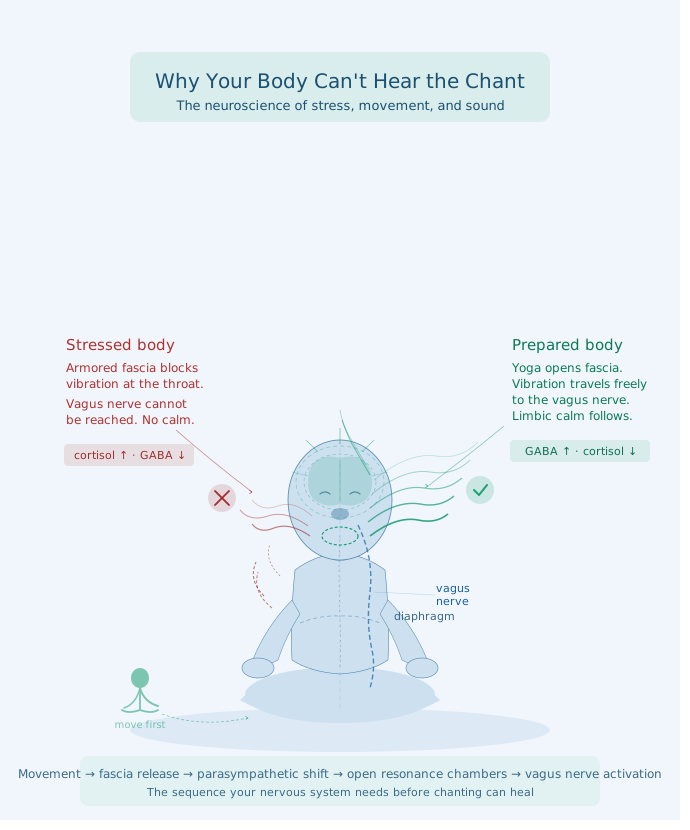
If you have ever experienced this, you did not fail at chanting. Your body was not broken. What was happening was something precise, measurable, and neurobiologically explicable: the accumulated load of chronic stress had armored your body in a way that made it physically impossible for vibration to travel freely, reach the vagus nerve, and trigger the cascade of neurochemicals that make chanting one of the most potent self-regulatory tools known to neuroscience.
This article explores what that blocking mechanism actually is, why physical movement and yoga can dissolve it, and what the science says about the correct sequence for using chanting in mental health practice.
Part One: What Chanting Actually Does to the Brain
Before understanding why chanting fails under stress, we need to understand what it accomplishes when it works.
A landmark fMRI study examined what happens in the brain during audible OM chanting compared to both a resting state and a control vocalization (“ssss”). The findings were striking: chanting produced significant bilateral deactivation in the orbitofrontal cortex, anterior cingulate gyrus, parahippocampal gyri, thalami, hippocampi, and — crucially — the right amygdala. The control vocalization produced none of these changes.
The amygdala is the brain’s threat-detection center. The hippocampus processes contextual memory, including memories of past stress. The anterior cingulate cortex governs rumination, self-criticism, and catastrophic thinking. The thalamus acts as the brain’s relay station for sensory signals. When chanting quiets all of these simultaneously, it produces a neurological state that is essentially the opposite of anxiety.
The researchers proposed a mechanism: the vibrations generated during OM chanting — which practitioners experience as a sensation around the ears — stimulate the auricular branches of the vagus nerve. This is the same nerve targeted in vagus nerve stimulation (VNS) therapy, a medical treatment used clinically for treatment-resistant depression and epilepsy. Earlier Positron Emission Tomography (PET) studies had already shown that direct cervical VNS reduces blood flow to the hippocampus, amygdala, and cingulate gyri — precisely the regions that OM chanting deactivates.
Chanting, then, is essentially a form of self-administered vagus nerve therapy. The question is: Why does it stop working when the body is under chronic stress?
Part Two: The Neurochemical Cascade That Chanting Is Supposed to Trigger
When the vagus nerve is properly stimulated by chanting, it initiates a downstream neurochemical sequence.
The vagal signal travels to the nucleus tractus solitarius (NTS) in the brainstem, which then sends inhibitory signals upward to the hypothalamic paraventricular nucleus (PVN). The PVN governs the hypothalamic-pituitary-adrenal (HPA) axis — the engine of the stress response. When the NTS quiets the PVN, the HPA axis reduces its output of corticotropin-releasing hormone (CRH), which in turn reduces cortisol secretion from the adrenal glands.
Simultaneously, the parasympathetic nervous system — of which the vagus nerve is the primary highway shifts the body out of sympathetic fight-or-flight and into what neuroscientist Stephen Porges describes as the ventral vagal state: a condition of calm, social engagement, and receptivity.
At the neurochemical level, two systems become particularly active:
- GABA (gamma-aminobutyric acid): The brain’s primary inhibitory neurotransmitter, reducing neural overactivity and producing a sense of quietness without sedation. Research on Om chanting reveals significant modulation of GABAergic pathways, correlating with the subjective experience of calm.
- Serotonin: Produced in the brainstem raphe nuclei and regulated via the gut-brain axis, serotonin governs mood stability and emotional resilience. The vagus nerve’s connection to the enteric nervous system — which contains approximately 90% of the body’s serotonin — means that chanting can influence serotonin through the gut-brain pathway.
Additionally, prolonged chanting produces a shift in brainwave frequency from beta waves (13–30 Hz, associated with active thinking and worry) toward alpha waves (8–13 Hz, relaxed alertness) and, in experienced practitioners, theta waves (4–8 Hz, deep meditation). Heart rate variability (HRV) , the gold standard measure of vagal tone increases significantly with regular chanting practice.
This is the full cascade that chanting is designed to produce. Now consider what happens when chronic stress intervenes.
Part Three: How Chronic Stress Blocks the Entire System
Chronic stress is not simply a mental state. It is a whole-body physiological condition that restructures the body at the tissue level.
When the stress response is activated repeatedly — by relentless work pressure, unresolved trauma, relationship conflict, or any persistent threat — the HPA axis becomes dysregulated. Cortisol, initially an adaptive hormone, begins circulating at elevated baseline levels. Over time, the brain’s hippocampus begins to atrophy, and the hypothalamus loses its sensitivity to cortisol’s negative feedback signal. The system gets stuck in a state of chronic arousal.
But the effects are not only neurochemical. They are somatic, written into the muscles, fascia, and connective tissue of the body.
The concept of body armoring, first articulated by psychiatrist Wilhelm Reich and later elaborated by somatic therapists and trauma researchers, describes the unconscious muscular holding patterns that form in response to chronic stress and unresolved emotional experience. When the body is repeatedly threatened, even psychologically, it braces. The chest tightens. The diaphragm shallows its movement. The throat constricts. The shoulders rise. The jaw clenches.
This matters enormously for chanting, for a precise anatomical reason: the primary resonance chambers of the voice: the throat, chest, sinuses, diaphragm, are exactly the regions that chronic stress armors most heavily. If the throat is constricted, vibration cannot freely propagate. If the diaphragm is guarded, the extended exhalation that activates the vagus nerve cannot happen fully. If the fascia of the chest is locked, sound cannot travel into the body cavity where the vagus nerve’s branches sense it.
Chronic stress also impairs interoception, the brain’s ability to perceive internal bodily signals. Research shows that chronic stress disrupts the brain-body axis of communication, creating a disconnect between what the body is doing and what the brain registers. When interoception is impaired, a practitioner may chant perfectly correctly and still feel nothing. Not because nothing is happening, but because the signal is not reaching conscious awareness.
Part Four: Why Yoga and Movement Are the Unlocking Key
Physical movement, particularly yoga, somatic movement practices, and breathwork, operates directly on the variables that chronic stress has compromised. When done before chanting, it functions as a neurological preparation, resetting the body’s baseline so that sound can actually land.
Myofascial Release and Motor Cortex Repatterning
Movement stimulates proprioceptive receptors throughout the muscular and fascial system, sending signals to the motor cortex that update the brain’s body map and reduce default muscle tone. Pandiculation (voluntary contraction followed by slow, controlled lengthening) directly engages the motor cortex in releasing the chronic guarding patterns that armoring creates. When the throat, chest, and diaphragm are moved, stretched, and consciously softened, the resonance chambers of the body open.
HPA (Hypothalamic-Pituitary-Adrenal) Axis Downregulation
Yoga interventions show significant reductions in sympathetic nervous system activity and improvements in HRV. Even a single session of mindful physical movement produces a cortisol response followed by a recovery phase in which cortisol drops below baseline. Entering chanting in this recovery phase means the HPA axis is already quieter.
Parasympathetic Priming
Yoga postures involving inversion, forward folding, extended exhalation, and spinal decompression directly stimulate the vagus nerve before chanting begins. HRV increases measurably during and after yoga practice. The nervous system arrives at the chanting practice already partway through the shift from fight-or-flight to rest-and-digest.
Interoceptive Restoration
Research on yoga and interoception shows that yoga practice significantly enhances body awareness and interoceptive sensitivity. When movement teaches the practitioner to feel their body from the inside, the brain-body communication axis is actively rehabilitated. When chanting follows this preparation, the practitioner can actually feel the vibration traveling. The resonance becomes perceptible.
Part Five: The Clinical and Research Framework
The convergence of research streams that supports this sequencing is remarkable.
Studies on Om chanting consistently demonstrate limbic deactivation, the quieting of the amygdala, hippocampus, and anterior cingulate, with effects that mirror clinical vagus nerve stimulation. Research on serotonergic and GABAergic mechanisms reveals significant neurochemical modulation during chanting practice, including cortisol reductions that persist for several hours post-session.
Cross-cultural research comparing Om chanting, Tibetan throat singing, and Gregorian chanting found common patterns of brainwave entrainment and autonomic nervous system modulation, suggesting that the healing mechanism of chanting is universal, rooted in shared neurobiology rather than cultural specificity.
The sequencing that ancient contemplative traditions intuitively preserved, asana before pranayama before mantra, physical practice before energetic practice before meditative practice, maps precisely onto what modern neuroscience now understands about the order in which the nervous system must be prepared.
Part Six: A Practical Protocol
For practitioners working with mental health, stress, or trauma, the following sequence reflects both the research and the clinical logic:
Phase 1: Somatic preparation (10-20 minutes)
Begin with physical movement targeting the regions most often armored by stress: the jaw, throat, shoulders, chest, and diaphragm. Gentle spinal movements such as cat-cow, lateral flexion, and axial rotation stimulate vagus nerve branches along the spine. Forward folds with relaxed neck and jaw encourage the parasympathetic shift. Hip openers and psoas-releasing postures address deep contraction patterns. Each movement should be accompanied by slow, full breathing with extended exhalation.
Phase 2: Breathwork bridge (5-10 minutes)
Before chanting, practice extended exhalation breathing: inhale for four counts, exhale for six to eight. This directly activates baroreceptors in the aortic arch and carotid sinus, signaling the brainstem to increase vagal tone. HRV rises measurably within minutes.
Phase 3: Somatic body scan (3-5 minutes)
Guide awareness through the primary resonance chambers: abdomen, chest, throat, sinuses. Notice any remaining areas of holding. This is the interoceptive restoration step, re-establishing the brain-body communication channel so that chanting’s resonance can be felt and processed.
Phase 4: Chanting (15-30 minutes or more)
Only now begin the chanting practice. The body is prepared: fascia has softened, the nervous system has shifted toward parasympathetic dominance, HRV has risen, cortisol has dropped, and interoceptive sensitivity has been restored. The vibrations of chanting can now travel freely, reach the auricular branches of the vagus nerve, and initiate the full neurochemical cascade.
The practitioner will feel the difference. The sound lands in the body differently. There is warmth, a sense of resonance traveling downward through the sternum. The experience is no longer effortful but self-sustaining.
Conclusion: The Body Must Be Spoken to First
The insight at the center of this framework challenges a deeply held assumption in many contemplative and therapeutic communities: that the mind can lead the body, that intention and practice are sufficient to overcome physical resistance.
Neuroscience offers a more compassionate and accurate account. The body armored by chronic stress is not a failing of will. It is a rational biological adaptation to threat, one that requires biological, not psychological, intervention before the deeper practices can work. Movement speaks the body’s language. It communicates directly with the fascia, the motor cortex, the autonomic nervous system, and the HPA axis.
When movement prepares the ground, chanting does not have to fight for entry. It is received. And in that reception, the full healing cascade, neurological, neurochemical, somatic, and psychological, can finally unfold.
Resources
Phase 1: Somatic preparation — movement, spinal release, psoas, jaw and throat
Somatic yoga for the vagus nerve (30 min) Full practice covering spinal movements, throat, and chest release — exactly what the article describes for Phase 1. https://www.youtube.com/watch?v=pmHYbxyZ5JI
Gentle somatic yoga for emotional release and stored trauma (vagus nerve focused) Covers jaw, shoulders, diaphragm, and hip openers — ideal for stress armoring. https://www.youtube.com/watch?v=4NPdGZ3jRBc
Release your tight psoas with pandiculation (the specific technique named in your article) Teaches pandiculation directly — voluntary contraction followed by slow lengthening — resetting the motor cortex. https://www.youtube.com/watch?v=3Z2fZ7TCBfw
Somatic exercises to release trauma from hips (7 min) Short, focused hip and psoas release for stress held in the body’s core. https://www.youtube.com/watch?v=N-4yjjq3L6U
Seated somatic vagus nerve reset and neck release Targets the jaw, neck, and throat specifically — the regions most armored under chronic stress. https://www.youtube.com/watch?v=KJ93K9TTs-I
Phase 2: Breathwork bridge — extended exhalation, vagal activation
Vagus nerve breathing for relaxation (extended exhalation practice) Guides the 1:2 inhale-to-exhale ratio directly, with clear instruction on diaphragmatic technique. https://www.youtube.com/watch?v=dkJDrfL90rU
Activate your vagus nerve — 10 minute yoga and breathing routine Combines spinal movement with extended exhalation breathwork — a good bridge between Phase 1 and Phase 2. https://www.youtube.com/watch?v=1e5BYx-dOvM
Phase 1 + 2 combined — somatic movement flowing into breathwork
Activate your vagus nerve — 15 minute blissful somatic yoga routine Fluid practice moving from body release into slow breathwork, ideal as a pre-chanting sequence. https://www.youtube.com/watch?v=TUvrf-Uv_eU